What is Strumming?
Strumming is when you brush your fingers or a pick across the strings in a rhythm. It's how you play chords and create that full guitar sound you hear in most songs. Once you get comfortable with a few basic patterns, you'll be able to play tons of songs.
Down Strokes and Up Strokes
There are two ways to strum:
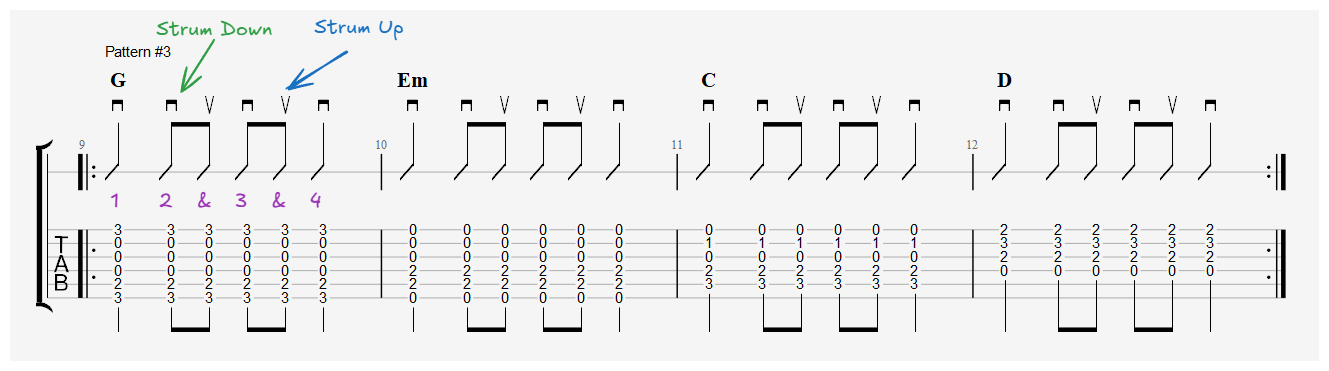
Down Stroke (П): Strum from the thick strings toward the thin strings. This feels natural and usually lands on the main beats.
Up Stroke (V): Strum from the thin strings back toward the thick strings. Takes a little practice, but you'll need it for most rhythm patterns.
Here's the trick: keep your hand moving like a pendulum, up and down, even when you're not hitting the strings. That steady motion makes everything easier.
Understanding the Beat
Most songs count in fours: 1, 2, 3, 4 (then repeat). If you tap your foot along to music, you're tapping on those numbers.
Want to add more to your rhythm? Split each beat in half: 1 & 2 & 3 & 4 &
The numbers are where your foot taps. The "ands" fall halfway between. Usually, you'll strum down on the numbers and up on the "ands."
How to Read the Notation
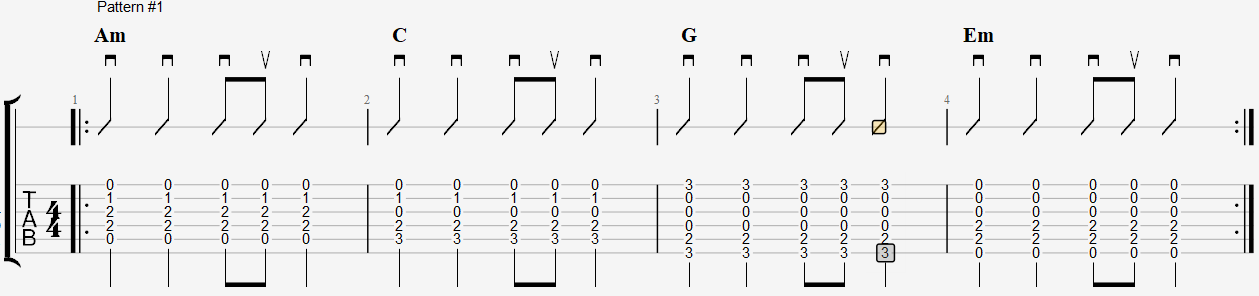
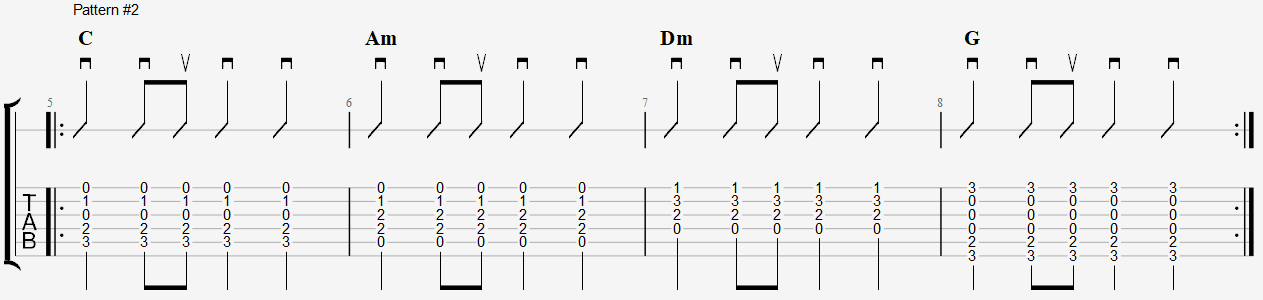
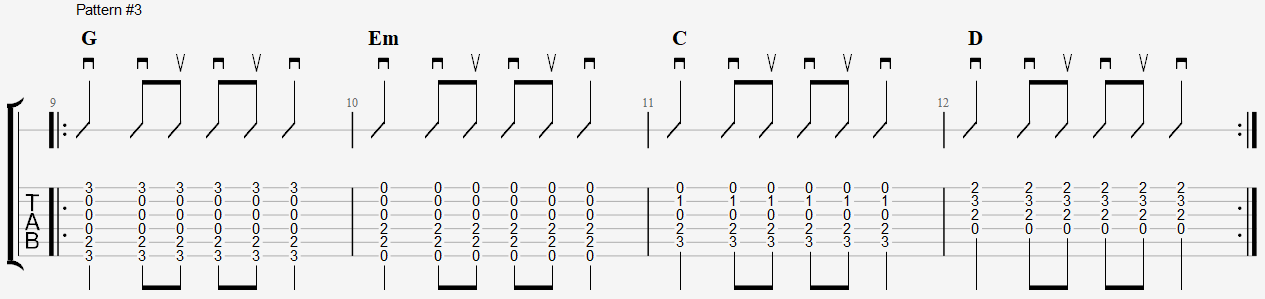
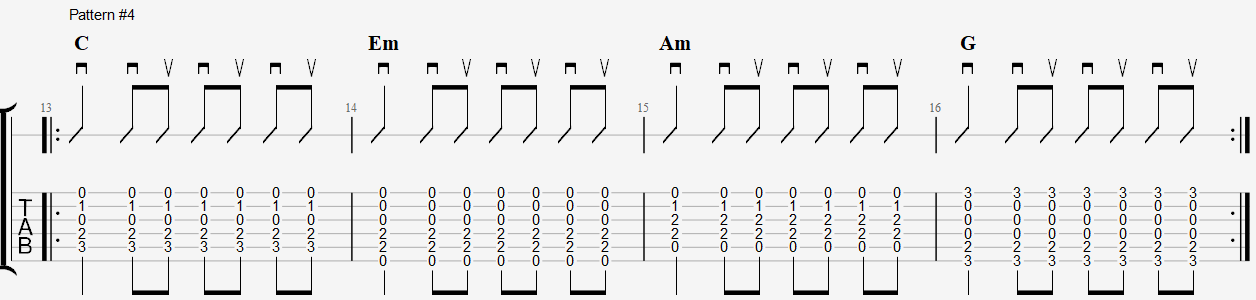
The patterns below use guitar tablature (tab):
- П above the tab = down stroke
- V above the tab = up stroke
- Numbers on the lines = which fret to press (0 = open string)
- The lines themselves = your guitar strings (top line is the thinnest)
Watch where each symbol appears above the tab. That tells you when to strum and which direction to go.
Practice Tips
- Start Slow: Use a metronome or just tap your foot to keep time
- Keep Moving: Don't stop your hand motion when you skip a strum
- Relax Your Wrist: Your wrist does the work, not your whole arm
- Listen First: Play the audio a few times before you try it yourself
- Practice Chord Changes: Work on switching between chords smoothly before worrying about complex strumming patterns. Get comfortable changing chords with a simple down-strum pattern first.
Strumming Patterns